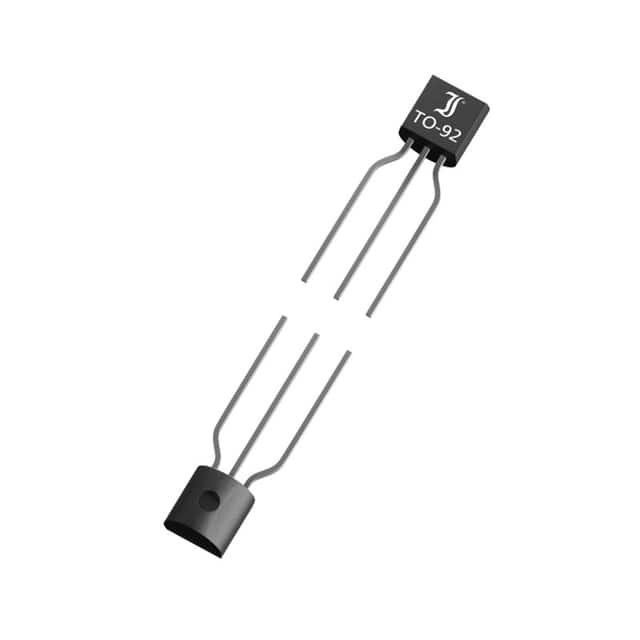
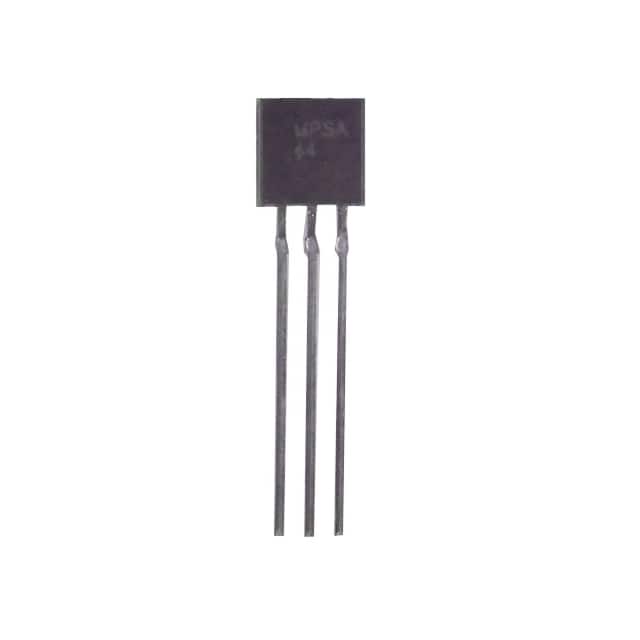
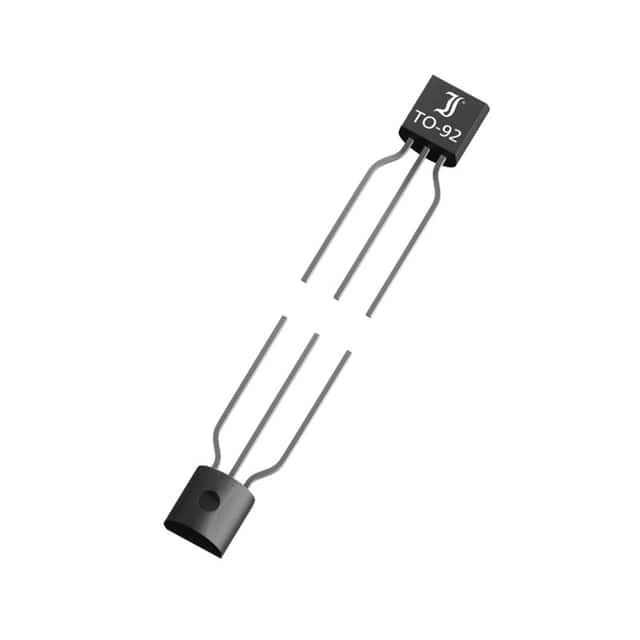
The BC547 transistor is one of the most sought-after NPN bipolar junction transistors (BJTs). It is widely employed in electronic designs due to its reliability and versatility. Typical applications for it include low-power applications like amplification and switching circuits, making it a key component in many designs.
Unfortunately, when designing real-world circuits, sometimes you might encounter situations in which it is unavailable, or you need an alternate with slightly different characteristics; when this occurs, choosing the appropriate replacement is vitally important to ensuring its success!
In this article, we will explore some of the most frequently used alternatives to the BC547 transistor, covering key specifications, typical applications, and comparisons to help you select an effective replacement for your circuit designs.
Key Specifications of the BC547 Transistor
| Manufacturer | Transistor Type | Max IC (mA) | Max VCEO (V) | Max PD (mW) | Typical Applications |
|---|---|---|---|---|---|
|
ON Semiconductor |
NPN |
100 |
45 |
500 |
Switching, Amplifier |
|
NXP Semiconductors |
NPN |
100 |
45 |
500 |
General-purpose switching/amp |
|
Fairchild/STMicroelec |
NPN |
500 |
45 |
625 |
General-purpose |
|
Philips/NXP |
NPN |
100 |
65 (BC546) / 45 (BC547) |
500 |
Switching, Amplification |
The table shows that the maximum collector current (IC) for most BC547 variants typically falls within 100 mA. However, some manufacturers, such as Fairchild, may offer models capable of supporting higher current applications (500mA maximum IC).
Most devices' VCEO ratings are in the top 45V range; however, Philips/NXP's BC546 variant offers a higher rating of 65V, which may be beneficial in applications with higher voltage tolerance.
The max power dissipation (PD) for various manufacturers varies between 500 mW and 625 mW; depending on your circuit's power requirements, this could impact your decision.
Understanding these specifications is critical in selecting a BC547 or an acceptable alternative based on your circuit's current, voltage, and power dissipation needs. The table provided here helps you compare variants and ensure you are using the part intended for your project.
also read:
Detailed Comparison of Common Substitutes for the BC547
Due to the BC547's widespread application, several comparable transistors can serve as suitable alternatives in different situations. These replacements are selected based on availability, cost, and specific performance requirements; here, we compare some similar parts, emphasizing key specifications and typical applications.
| Transistor Model | Max IC (mA) | Max VCEO (V) | Max PD (mW) | Pinout Configuration | Typical Applications |
|---|---|---|---|---|---|
|
BC547 |
100 |
45 |
500 |
C-B-E |
Switching, Amplification |
|
BC548 |
100 |
30 |
500 |
C-B-E |
Low-noise switching, Amplifiers |
|
2N3904 |
200 |
40 |
625 |
E-B-C |
Low-power switching, Audio Amplification |
|
2N2222 |
600-800 |
40 |
500 |
E-B-C |
Relay drivers, Motor Control |
|
BC549 |
100 |
30 |
500 |
C-B-E |
Low-noise Amplification |
|
BC639 |
1000 |
80 |
40,000 |
C-B-E |
High-power Switching, Power Amplifiers |
BC548
The BC548 is one of the most widely used replacements for BC547 transistors. This transistor shares many similar properties to its counterpart in terms of low noise and general-purpose switching applications; however, its max collector-emitter voltage (VCEO) is significantly lower at 30V, making it suitable for lower-voltage circuits but less ideal for higher-voltage applications.
2N3904
The 2N3904 transistor is another popular replacement for the BC547. With an increased current rating of 200mA and lower maximum VCEO of 40V than its BC547 counterpart, the 2N3904 may be suitable for medium-power applications; however, its limited range prevents use in higher voltage circuits.
2N2222
The 2N2222 transistor is known for its ability to withstand higher currents (600-800mA), making it suitable for higher-power applications. With an optimal voltage rating of 40V, its use in many low—and medium-power circuits should not pose any difficulty.
BC549
Like its BC547 predecessor, the BC549 is designed for low-noise performance. As such, it makes an ideal option for audio circuits and signal amplifiers, sharing similar current/voltage ratings but boasting superior noise characteristics for superior audio applications.
BC639
The BC639 transistor is a high-power device capable of handling up to 1A of collector current and 80V of collector-emitter voltage, making it suitable for high-power switching circuits and power amplification applications.
Important Considerations When Replacing the BC547 Transistor
When replacing the BC547 with another transistor, certain factors must be considered to ensure it performs as planned. While many alternatives share similar properties, even subtle variations could impact its operation within your circuit. Here is what to keep in mind when replacing this part:
Current and Voltage Ratings
To use an equivalent to the BC547 in your circuit, its current and voltage ratings must match or surpass its source component's (BC547). This includes max collector current (IC) of 100 mA and maximum collector-emitter voltage (VCEO) of 45 V for circuits requiring higher current handling, such as 2N2222 with up to 800mA collector current or BC639 with 1A collector current, respectively.
If your system operates at higher voltage levels like 65V, then BC546 would make an appropriate replacement component, such as its source component with its 65V VCEO rating!
Pinout Configuration
The BC547 transistor features a C-B-E (Collector-Base-Emitter) pinout, but not all its substitutes follow suit; two such options are the 2N3904 and 2222, both with E-B-C pinouts that require extra attention when replacing it with another model; otherwise, it may result in improper functionality or damage of your circuit.
Power Dissipation
When operating, transistors dissipate power through heat, making it essential to select an equivalent that can handle the power levels in your circuit. A BC547 typically dissipates 500 milliW; any replacement should at least match this amount of dissipation. Consider devices like 2N3904 (625mW) or BC639 (up to 40W) for higher-powered applications. When dealing with circuits that utilize large amounts of power flow, consider adding heatsinks or improving thermal management practices, as these components dissipate power as heat through their thermal management capabilities.
Gain (hFE) and Amplification Requirements
The BC547's gain range is 110 to 800, which determines its ability to amplify input signals. When choosing an alternative component to replace the BC547 in your circuit design, be sure to compare its gain characteristics closely if designing an amplifier; otherwise, a similar or compatible range would suffice. For low-noise applications like audio amplification, the BC548 or BC549 are recommended as they offer increased noise performance while still maintaining similar gain characteristics.
Noise Characteristics
If your circuit is sensitive to noise--for example, audio applications or signal processing--then select a transistor with low noise characteristics. A general-purpose transistor like BC547 may suffice, while BC549 and BC548 models tailored explicitly for low-noise performance could provide enhanced audio fidelity while minimizing distortion and signal loss.
Thermal Management and Considerations
Proper thermal management is paramount in high-power circuits. If a component has a higher power dissipation rating, such as the BC639's 40 W power dissipation capability, heat sinks or circuit modifications may be required to avoid overheating—especially in power amplifier applications where additional cooling may be necessary for optimal operation. Ensuring adequate heat dissipation will extend its lifetime and enhance circuit reliability.
Availability and Cost
Sometimes, the BC547 may not be readily available, or you might discover a cheaper substitute is more cost-effective. Two popular choices are 2N3904, 2N2222, and BC548 as suitable alternatives. Be wary when working on large projects or prototypes, as these components must be easily found at competitive prices from suppliers or distributors in your locality.
Advantages and Disadvantages of Common BC547 Substitutes
It's essential that when replacing the BC54-7, it is clear what its strengths and weaknesses among its available replacements, so here is a comparison between some of the more popular BC547 alternatives:
| Transistor Model | Advantages | Disadvantages |
|---|---|---|
|
BC548 |
- Ideal for low-noise applications |
- Lower voltage rating (30V) |
|
2N3904 |
- Higher current (200mA) |
- Lower voltage rating (40V) |
|
2N2222 |
- Higher current handling (600-800mA) |
- Higher noise, not ideal for low-noise circuits like audio amplification |
|
BC549 |
- Excellent for low-noise applications |
- Limited current handling (100mA) |
|
BC639 |
- High current (1A) |
- Overkill for low-power circuits |
Conclusion
Selecting an alternative transistor to replace the BC547 depends mainly on your circuit's specific needs, including current handling, voltage tolerance, noise performance, and power dissipation. Each alternative transistor boasts unique advantages; find more here.
For applications requiring low noise levels, such as audio amplification or signal processing, the BC548 and BC549 are excellent choices.
If you require higher current capacity, the 2N2222 and 2N3904 are excellent solutions, particularly the latter of which is well suited to relay driver applications and motor control.
The BC639 is ideal for high-power applications due to its higher current and voltage ratings - making it suitable for power amplifiers and circuits involving high currents.
Always refer to the datasheet of any substitute transistor to ensure it meets your circuit's specific needs, particularly regarding pinout configuration, thermal management, and gain. Choosing the suitable alternative ensures your circuit operates efficiently, reliably, and within its design specifications.