The right tempsensor isn't always easy. If it's an electronics engineer searching for the ideal sensors for the circuit, you're working on, or a purchasing manager worried about the reliability and costs, or an avid technical lover trying to comprehend the distinctions between the two, making the right choice requires thoughtful evaluation.
At first glance, it appears that both NTC sensors and RTD sensors are temperature sensors. However, they operate differently, offer various levels of accuracy, and are best suited to different scenarios. How do you determine which one is best suited to your requirements?
Let's walk through the steps step by step.
What Are Temperature Sensors? Why Do They Matter?

It is a thermometer, an electronic part that senses and records the temperature of changes and converts them into electrical signals. They're everywhere, from consumer electronic devices such as thermostats and smartphones to industries such as energy plants and HVAC systems.
However, the fact is that not all temperature sensors function in the same way. Certain are made to handle rapid temperature fluctuations, while others are designed to provide exact monitoring for the long run. Some are small, inexpensive, and compact, while others are costly but extremely reliable.
Therefore, when deciding from NTC thermostors or RTD sensor It is important to know the way they work and what they're most suitable for..
How Does an NTC Temperature Sensor Work?
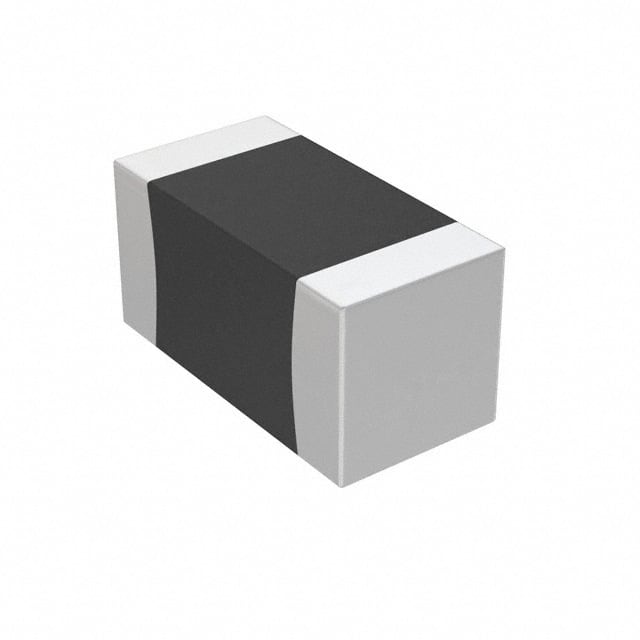
An NTC (Negative Temperature Coefficient) sensor is a form of resistor whose resistance decreases when the temperature rises.

As if you were adjusting the water faucet. The more you adjust it, the more powerful the flow. In the same way, with the case of an NTC thermostat, in which the temperature increases, its resistance is reduced to allow more electricity flow.
What is it that makes NTC sensors unique?
- They are quick to react to temperature fluctuations.
- They are tiny and affordable.
- They are extensively used in electronic devices used every day.
Due to these features, NTC sensors are perfect for use in situations in which price and speed of response are more important than precision.
However, there's one drawback: the fact that they're not perfectly linear, which means that the resistance won't decrease in a straight and predictable way. This means that you'll need to calibrate them using software to ensure precise temperature readings.
How Does an RTD Temperature Sensor Work?
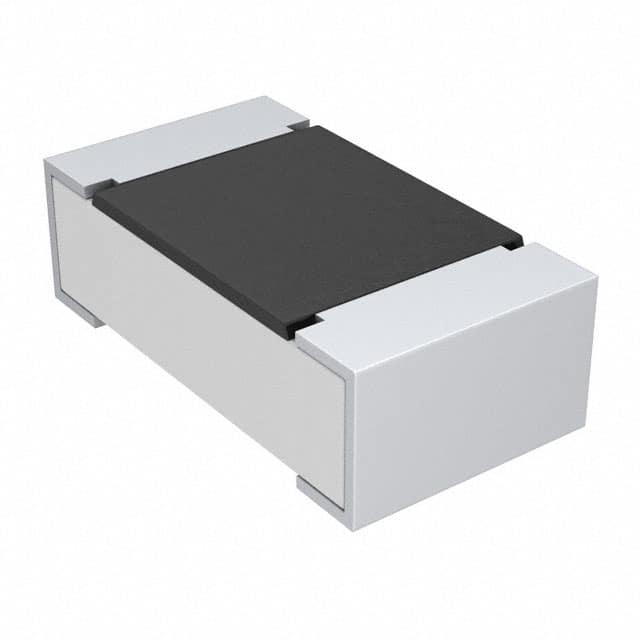
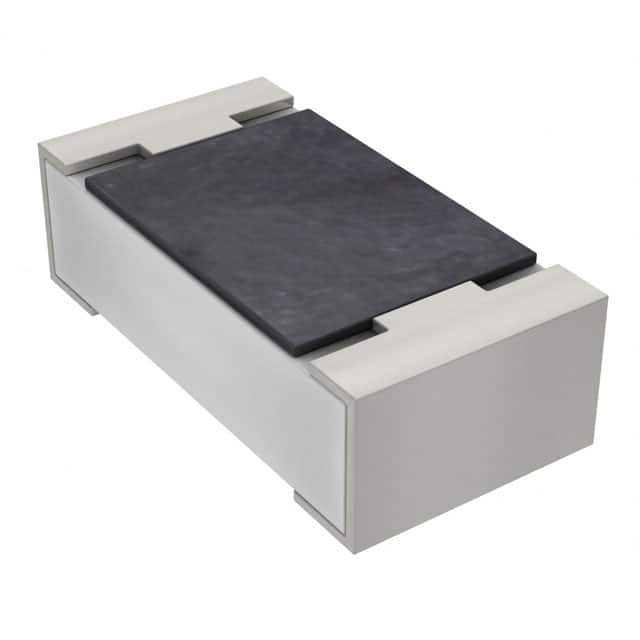
The RTD (Resistance Temperature Detector) works the opposite--its resistance rises when the temperature increases.
Think about heating a metallic rod. As it gets hotter it expands a little and its electrical resistance grows in a predictable manner. RTD sensor, specifically ones made from platinum (Pt100, Pt1000,) employ this concept to accurately measure temperature.

Why are engineers so fond of RTD sensors?
- They offer highly precise reads (+-0.1degC).
- They remain durable over long time spans.
- They operate at the extreme temperature range (-200degC to 800degC).).
The problem? RTD sensors are much more costly and are slower to respond than NTC thermistors.
If you require accuracy and stability over the long term, RTDs are the ideal choice.
NTC vs RTD key differences and selection Guide
At this moment, you may be asking yourself: Which one should I pick?
This comparison will assist you in making a decision:
| Feature | NTC Temperature Sensor | RTD Temperature Sensor |
| How it works | Resistance decreases with temperature | Resistance increases with temperature |
| Accuracy | Moderate | High (±0.1°C precision) |
| Response time | Fast | Slower |
| Best for | Consumer electronics, IoT, batteries | Industrial machines, medical equipment |
| Cost | Low | High |
However, a table with a basic structure isn't enough. Let's explore deeper into real-world scenarios.
For Electronics Engineers: Balancing Performance and Suitability
If you're developing a battery management system (BMS), a processor cooling system, or another IoT device, you may be seeking sensors that are tiny, inexpensive, and can respond quickly to temperature fluctuations.
In this instance, NTC thermistors are the best option due to:
- They are small--perfect for small spaces on PCBs.
- They respond almost immediately to temperature fluctuations.
- They are less expensive than RTD sensors.
If you're working on an industrial control system with high precision then you'll need an RTD-based sensor may be the best way to take.
Why? Because RTDs:
- Offer stable and reliable readings for extended periods of time.
- They are highly precise, even in the most extreme conditions.
- They do not degrade as rapidly in time as NTC sensors.
Therefore, if you require an affordable solution to speed up temperature sensing, opt for NTC. If you need accuracy and reliability for a long time, RTD is a better choice.
For Procurement Managers: Cost, Supply Chain, and Reliability
If you're responsible for the acquisition of components for electronic devices, the questions may be different. It's likely that you're asking:
- Which one is more economical?
- Which one is more easy to obtain in huge quantities?
- Which one is the most reliable? Long-term stability?
From a cost standpoint, NTC thermistors are the most cost-effective option.
They are much less expensive than RTDs and sometimes cost just 20-50% of the cost of RTDs.
They are readily accessible from a variety of sources, such as Digi-Key and Mouser.
But, if long-term reliability and consistency of batches are important, RTD sensors may be worth the cost.
If you are looking for an inexpensive device for production in mass, NTC is better. If you are looking for the stability and precision of a sensor for industrial use RTD is the best way to take.
For IoT Developers & Tech Enthusiasts: Usability and Innovation
If you're an Arduino or Raspberry Pi enthusiast, your choice could come down to the ease of connection along with compatibility.
- NTC sensors can be simpler to use since they are connected straight to ADC pins.
- RTD sensors require additional electronics (like Wheatstone bridge amplifiers) for proper operation.
This is why the majority of homemade projects, as well as smart home appliances, make use of NTC-based sensors. Industrial applications of IoT (like remotely monitoring temperature) usually depend on RTD sensors.
Where to Buy Reliable NTC and RTD Sensors?
No matter what you choose, buying from a trustworthy supplier is vital. Here are some suggested distributors:
- Digi-Key is ideal for engineers who require datasheets as well as technical assistance
- Mouser Electronics - Suitable to use in the industrial sector for RTD procurement
- Arrow Electronics Ideal for large purchases and solutions for businesses
- Chipmall.com–An online electronic component distributor offering a wide range of electronic parts at lower prices with guaranteed quality.
Before purchasing, always check:
- Datasheets - Make sure the sensor can meet your temperature range and precision requirements.
- Certifications Search for RoHS-certified components and ISO-certified ones.
- Stock from suppliers: Do not delay your order because of the limited supply.
Conclusion
If you need a low-cost, fast-response sensor for consumer electronics or IoT devices, NTC thermistors are the best choice. They are compact, affordable, and easy to integrate. However, if high precision and long-term stability are your priorities—especially for industrial automation, medical devices, or extreme temperature environments—then RTD sensors are the better option.
Procurement managers should weigh cost and availability, with NTC being more budget-friendly and RTD offering better accuracy. Ultimately, your choice should balance cost, accuracy, and application requirements—NTC for affordability and speed, RTD for precision and reliability.